English| EUR
Suggested for you
More currencies
Choose a language
Three symbols, one band, and a technique that has passed through Galway workshops since the early eighteenth century. This how to make a claddagh ring guide explains what the process actually involves, from wax carving to final polish. It also covers what you can see for yourself at 26 Shop Street, Galway City.
Quick answer
A traditional Claddagh ring is made by carving a wax master of the heart, hands and crown, casting it in silver or gold, then filing, soldering and hand-polishing the band — a sequence of roughly a dozen bench stages. Entry to the visitor centre and museum is free at 0 EUR. Arrive between 09:00–17:00 to see the workshop floor active.
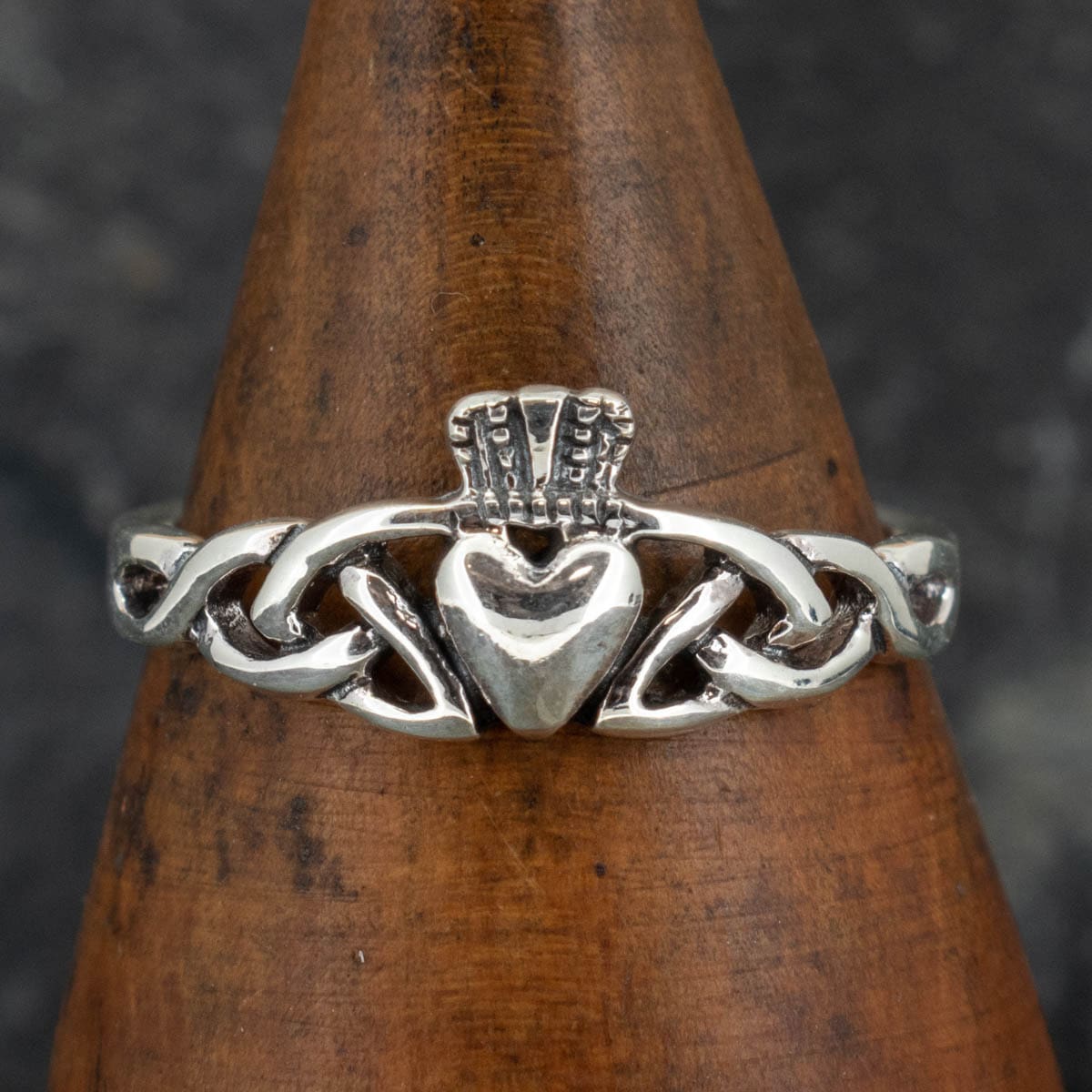
The design predates most of the buildings around it. Claddagh rings have been struck in Galway since the 1700s, when the fishing village of the Claddagh sat outside the city walls and its goldsmiths worked to a motif nobody has improved on since: two hands clasping a crowned heart. The hands mean friendship, the heart love, the crown loyalty. That reading has stayed fixed for three centuries, which is why the question of how to make a claddagh ring is really a question about fidelity to a pattern rather than invention. The method has changed less than visitors expect. A silversmith begins with a wax model, carving the crown's points and the knuckles of each hand at a scale where a slip of the blade costs the whole master. The wax is invested in plaster, burnt out, and the cavity filled with molten sterling silver or gold — lost-wax casting, the same principle used for bronze figures in antiquity. What emerges is rough: a sprue to saw away, casting skin to file back, a shank that must be sized and soldered true. Then comes the long part. Hand-finishing a single band involves successive grades of emery, a fine burr to sharpen the heart's cleft, and buffing on a felt wheel until the crown catches light. Bench jewellers describe the polishing as the stage that separates a competent ring from a good one. Anything written about Claddagh ring making tends to skip that patience. Watching it is more instructive than reading it, and the workshop at 26 Shop Street, Galway City exists partly for that reason: the hallmarking, the bench tools, the display of period rings, and a 20-minute heritage film that traces the design from the Claddagh village to the diaspora that carried it worldwide. Entry costs nothing. Visitors researching Galway landmarks or planning a claddagh ring making workshop experience will find the demonstration floor most active in the morning, before tour groups reach Shop Street. The practical takeaway for anyone studying how to make a claddagh ring is that the craft rewards observation before instruction. See the wax stage, watch a shank soldered, then decide whether you want a hands-on session or a ring made for you. The sections below cover the process step by step, the full weekly hours, what things cost, how to reach Shop Street, and the arrival windows worth targeting.
“The hands mean friendship, the heart love, the crown loyalty — a reading that has stayed fixed for three centuries.”
This procedure takes you from your first enquiry through to holding a Claddagh ring you helped shape, following the same sequence the workshop uses with visitors at 26 Shop Street, Galway City. Allow a couple of hours on the day, since the making itself sits alongside the heritage film and the workshop floor viewing.
Ring +35391562554 or use the booking pages on https://www.thecladdagh.com to check whether a hands-on session is running on your date. Most people assume the making session runs on demand alongside general entry, when in practice places are limited and confirmed in advance.
Sit through the film before you handle any tools, as it explains the hands, heart and crown motif and why the design is cast rather than carved. Visitors who skip it tend to misread which element points where when they later set up their own ring.
Confirm your finger size and metal with the goldsmith before work begins, using the sizing gauges provided rather than an existing ring. A ring measured off jewellery worn on another finger is the single most common cause of a poor fit at the end.
Anneal, bend and form the band on the mandrel, following the goldsmith's hammer rhythm rather than your own. Striking too hard thins the shank unevenly, which shows once the piece is polished.
Position the motif so the crown sits above the heart and the hands close symmetrically around it, then solder under supervision. Rushing the alignment before the solder flows leaves the crown sitting off-centre permanently.
Work through the files and polishing wheels until the inside of the band is smooth, checking the seam under the loupe. People concentrate on the front of the ring and forget the inner surface, which is what the wearer actually feels.
Have the finished piece checked and, where applicable, sent for Dublin Assay Office hallmarking before you take it home. Hallmarking is not instant, so ask at the counter how your ring will reach you if you are travelling on.
The visitor centre is open daily to provide insight into the heritage and craft behind the Claddagh ring. Visitors may access the facility throughout the week during the following hours.
Visitors may access the visitor centre and museum without charge. All guests are welcome to explore the heritage site and history of the Claddagh ring at no cost.
Verdict: Admission to the facility is 0 EUR, providing complimentary access to the heritage exhibits and educational film.
The workshop is located at 26 Shop Street in the heart of Galway City. As Shop Street is a pedestrianized zone, the location is most easily reached on foot or via public transport links serving the city center.
Irish Rail to Galway (Ceannt) Station
Bus Éireann or City Direct to Eyre Square
Parking available at Hynes Yard or Cathedral car parks
Since Shop Street is pedestrian-only, plan to park at nearby facilities and complete your journey by walking. Aim to arrive within the recommended window to ensure time for the heritage film before your workshop.
Everything you need to know about how to make a claddagh ring
You can visit the home of the original design in Galway City to explore the heritage and craftsmanship behind these iconic symbols. While hands-on creation is a specialized skill, the visitor centre provides deep insight into the silversmithing traditions associated with the piece. Visitors interested in how to make a claddagh ring will find the history and the traditional casting methods explained through our heritage exhibition. The process involves understanding the deep cultural significance of the hands, heart, and crown, which represent friendship, love, and loyalty. You can explore these symbolic motifs while learning about the historical techniques used by master jewelers. There is no entrance fee to access the visitor centre and museum where you can discover the story of the Galway goldsmiths. Researching the background of the jewelry is free, though guided workshops may have separate requirements or bookings. We recommend allowing time to watch the 20-minute heritage film, which offers a comprehensive look at the artisan history of the area. This ensures you have a full understanding of the tradition before exploring the exhibits. Families are welcome to visit the centre to learn about Irish heritage together. Please note that the facility is designed for educational exploration and observing the traditional craft. The centre is open Monday through Saturday from 09:00 to 18:00 and on Sunday from 11:00 to 18:00. This schedule allows for flexible planning when you visit to learn about our silver and gold collections.